Day Trips · Desert
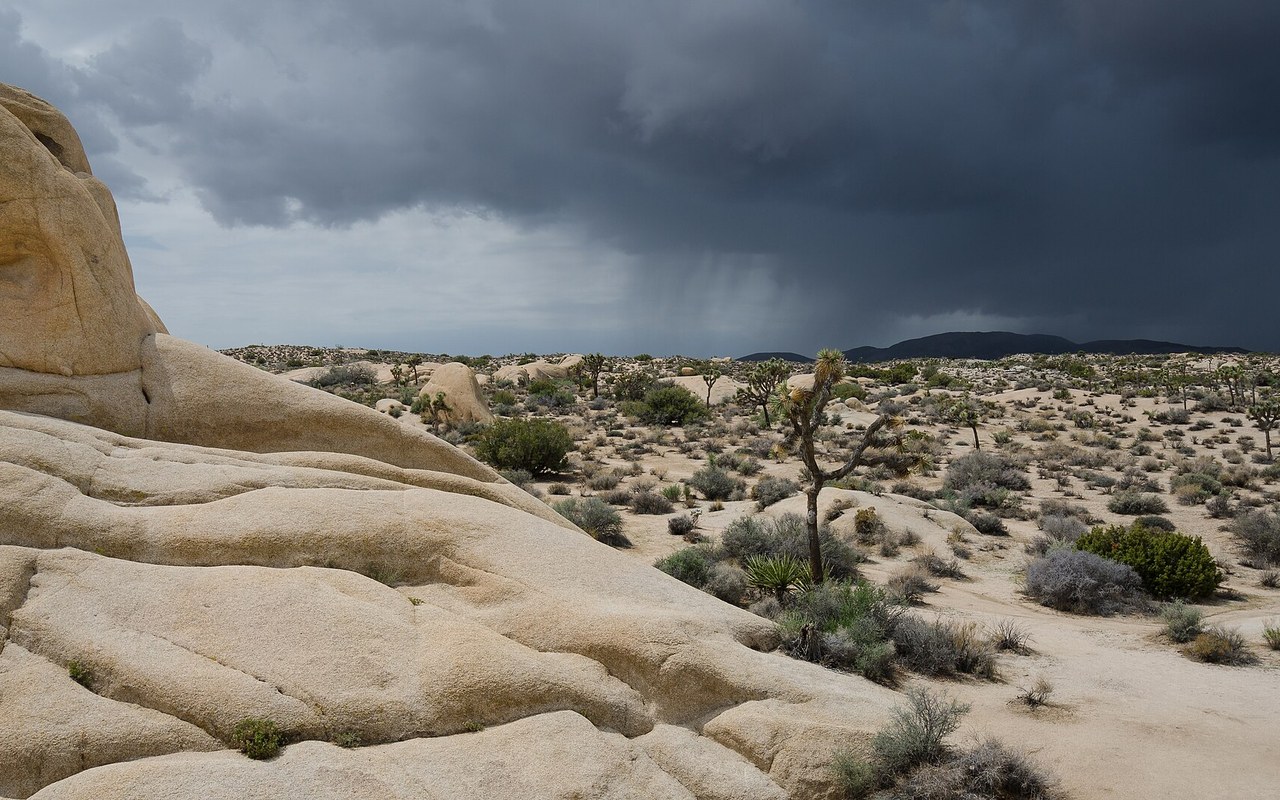
The area was designated a national monument in 1936 and upgraded to a national park in 1994, covering about 800,000 acres exactly on the boundary between the Colorado and Mojave deserts, which is why the vegetation changes visibly as you drive through. The park takes its name from the tree, which is slow-growing and can live for centuries. Visitor numbers run around three million a year, concentrated on spring and autumn weekends, which is why the entrance queue at Joshua Tree town can run twenty minutes on a Saturday in April.
From Los Angeles, take the 10 east: about 130 miles and two and a half hours to the town of Joshua Tree. Entry is $30 per vehicle for seven days. Fuel up and buy water in Yucca Valley, because there is nothing inside. The main stops are Hidden Valley, a one-mile loop between rock walls; Keys View at 5,185 feet, looking over the San Andreas fault; and Skull Rock, which is visible from the road and requires no walking at all.
The constraint is climate. From June to September daytime temperatures run 38 to 42 degrees with no shade on the trails, and afternoon hiking is genuinely dangerous rather than merely uncomfortable. Winter nights drop below freezing, so a sleeping bag rated for zero is the minimum. Mobile coverage is patchy, so download maps before you enter. The 500-odd campsites at Jumbo Rocks and elsewhere book out six months ahead on recreation.gov, and turning up without one rarely works.